
Buying black pepper in bulk requires more than comparing prices. Importers need to evaluate pepper quality, origin, specifications, cleaning, testing, packaging, documentation, and shipment planning before confirming a large order. A reliable sourcing process helps buyers maintain consistent quality and avoid problems during customs clearance or production.
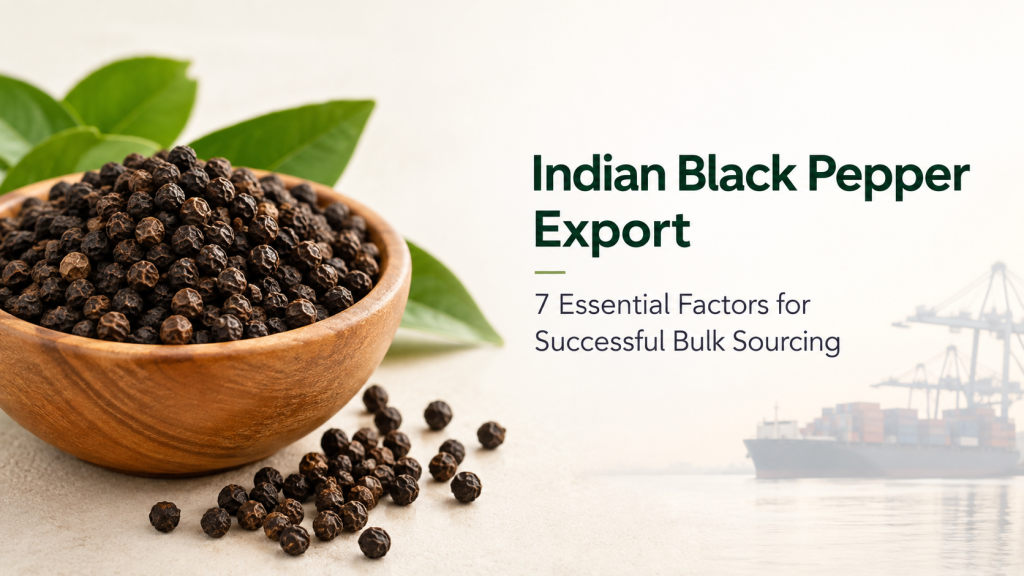
India has a long-established spice industry and remains an important source for international buyers looking for whole black pepper. For businesses involved in food manufacturing, spice blending, seasoning, distribution, and retail packing, understanding the basics of Indian Black Pepper Export can make bulk sourcing more predictable and efficient.
Read More: Why Indian Spices are in High Demand Worldwide
Why Indian Black Pepper Export Matters to Bulk Buyers
Black pepper is widely used in food processing, seasoning blends, sauces, ready-to-eat products, meat preparations, and household spice products. Its value for buyers depends heavily on characteristics such as aroma, pungency, cleanliness, moisture, berry size, and processing standards.
India’s major pepper-growing regions include Kerala, Karnataka, and Tamil Nadu. These producing areas have established cultivation and trading networks, giving international buyers access to commercially suitable pepper through experienced suppliers and commodity traders.
For bulk purchases, however, the country of origin is only one part of the decision. Buyers should clearly define the required specifications and verify that the supplier can consistently meet them.
1. Understand Black Pepper Grades and Specifications
One of the first steps in bulk sourcing is defining the exact pepper specification required for the shipment.
Commercial black pepper may be differentiated according to berry size, density, cleanliness, moisture, and other physical characteristics. Buyers should therefore avoid ordering simply by using the term “black pepper” without providing detailed specifications.
Important parameters can include:
- Whole black peppercorns
- Berry size and uniformity
- Bulk density
- Moisture level
- Foreign matter
- Light or defective berries
- Broken peppercorns
- Colour and appearance
- Aroma and pungency
- Admixture
- Cleanliness
The required specification may vary according to the buyer’s end use. A spice blender may require a different profile from a food manufacturer or retail packer.
Before placing a bulk order, the buyer and supplier should agree on the specification sheet so that both sides have the same quality expectations.
2. Check Origin and Overall Pepper Quality
Origin can influence the characteristics and commercial value of black pepper. India has several established pepper-producing regions, with Kerala, Karnataka, and Tamil Nadu being important areas of cultivation.
For international buyers, checking origin helps establish traceability and gives additional context about the product being purchased. However, the growing region alone should not be treated as a quality guarantee.
A proper quality assessment should consider:
- Natural black colour
- Characteristic pepper aroma
- Pungency
- Mature and well-developed berries
- Low levels of defective material
- Clean appearance
- Consistent size
- Proper drying
- Suitable moisture
Sample evaluation is particularly important when buying larger quantities. A representative sample allows the buyer to assess physical appearance and sensory characteristics before committing to a complete shipment.
3. Look for Proper Cleaning and Sortex Processing
Cleaning is a critical part of commercial spice preparation. Raw agricultural commodities can contain dust, stems, stones, immature material, or other unwanted matter if they are not properly processed.
For bulk black pepper, professional cleaning can improve the uniformity and presentation of the final product.
Modern processing may include:
- Pre-cleaning
- Mechanical separation
- Grading
- Foreign-matter removal
- Size separation
- Sortex-based optical sorting where applicable
- Hygienic handling
- Controlled storage
Sortex technology can help separate visually different or defective particles and improve lot consistency. However, machinery is only one part of the quality-control process. Proper handling, trained personnel, sanitation, and storage conditions are also important.
For buyers, it is useful to understand how the supplier processes the pepper before packing and shipment.
4. Confirm Laboratory Testing and Food-Safety Requirements
Food safety should be discussed before the order is finalized, especially when the destination country has specific import requirements.
Depending on the destination and buyer’s specifications, testing may cover parameters such as:
- Moisture
- Microbiological quality
- Pesticide residues
- Foreign matter
- Aflatoxins where applicable
- Other contaminants
- Product-specific food-safety parameters
Importers should communicate their destination-country requirements clearly. Testing requirements can differ between markets, and a specification suitable for one destination may not automatically satisfy another.
For this reason, buyers should confirm testing requirements during the quotation and sample-approval stage rather than waiting until the cargo is ready for dispatch.
Where required, laboratory testing and inspection can provide additional documentation for the buyer’s quality records and import procedures.
5. Choose the Right Bulk Packaging
Packaging protects black pepper from moisture, contamination, handling damage, and other risks during transportation and storage.
The correct packaging depends on the buyer’s requirements, destination, storage conditions, and intended use.
Common commercial packing options may include:
- 25 kg bags
- 50 kg bags
- PP bags
- Other buyer-specific packaging formats
For some buyers, inner liners or customized packing may be required to provide additional protection. Packaging specifications should therefore be agreed before production and loading.
The packaging should also be clearly marked with relevant shipment information, such as product name, net weight, lot or batch information, origin, and other details required by the buyer or destination regulations.
Good cargo preparation is especially important when pepper is transported over long distances. Containers should be clean, dry, and suitable for food cargo.
6. Verify Export Documentation and Compliance
Documentation is an essential part of successful international spice sourcing. Even when the physical product meets the agreed specification, incomplete or incorrect paperwork can create delays.
Depending on the transaction and destination, documentation may include:
- Commercial invoice
- Packing list
- Certificate of origin
- Shipping documents
- Inspection or laboratory reports where required
- Phytosanitary documentation where applicable
- Fumigation-related documents where applicable
- Other destination-specific certificates
Indian spice exporters also need to follow applicable registration and regulatory requirements. Buyers should confirm the documentation required for their specific country before shipment.
A professional supplier should be able to coordinate documentation with the buyer, freight forwarder, inspection agencies, and other parties involved in the shipment.
7. Plan Shipment, Cargo Handling and Delivery Carefully
Bulk sourcing does not end when the purchase order is confirmed. Shipment planning is equally important.
Before loading, buyers and suppliers should confirm:
- Quantity
- Packing format
- Container type
- Loading schedule
- Port of loading
- Inspection requirements
- Fumigation requirements
- Shipping documents
- Destination port
- Delivery terms
- Expected transit period
Proper cargo handling helps protect the pepper during transportation. The container should be inspected before loading to ensure that it is clean, dry, and free from conditions that could affect food cargo.
For Indian spice shipments, ports such as Mundra and Nhava Sheva/JNPT may be used depending on the shipment arrangement and logistics plan.
Clear communication between the supplier, buyer, freight forwarder, and inspection team can reduce avoidable delays and improve shipment coordination.
Common Mistakes Bulk Pepper Buyers Should Avoid
Even experienced importers can face problems when specifications are not clearly communicated. Some common mistakes include:
Buying Based Only on Price
The lowest quotation may not represent the best overall commercial value. Quality, testing, packaging, documentation, and shipment reliability should also be considered.
Not Approving a Representative Sample
A sample provides an opportunity to verify appearance, aroma, cleanliness, and other agreed characteristics before the complete order is processed.
Using Unclear Specifications
Terms such as “premium pepper” can mean different things to different suppliers. A written specification sheet creates a clearer purchasing standard.
Ignoring Destination Requirements
Food-safety and documentation requirements can vary between importing countries. These should be checked before production and shipment.
Delaying Packaging Decisions
Late packaging decisions can affect production schedules and shipment readiness. Packaging should be finalized during order confirmation.
Why Choose Mega Grain for Indian Black Pepper Sourcing?
Mega Grain is an India-based agricultural commodity trading and global trade facilitation group with more than 36 years of industry experience.
The company works across agricultural commodities and spices and supports international buyers with sourcing, quality coordination, documentation, inspection, packaging, and shipment-related requirements.
For black pepper buyers, the sourcing process can be coordinated around agreed specifications, sample approval, quality requirements, hygienic handling, packaging, and cargo preparation.
Mega Grain’s approach focuses on understanding the buyer’s requirement first and then coordinating the product and shipment accordingly. This is particularly useful for bulk buyers who require consistent communication from sourcing through dispatch.
Mega Grain Offices & Contact Details
Head Office:
402, Prabhat Kiran Building,
Rajendra Place, New Delhi – 110008, India
📞 +91-11 25719896 – 97
📞 +91-9555899006
📧 info@megagrain.com
🌐 www.megagrain.com
Contact Persons
- Neeraj Dhawan
- Radhika Dhawan
- Kritika Dhawan
Conclusion
Successful bulk sourcing depends on having clear specifications, reliable quality control, suitable packaging, proper testing, complete documentation, and well-planned logistics. For international buyers, Indian Black Pepper Export can provide access to established sourcing networks and commercially suitable pepper, but the quality and compliance requirements should always be agreed before the order is finalized.
By evaluating the product beyond its price and maintaining clear communication throughout the purchasing process, importers can build a more consistent and efficient black pepper sourcing program.