
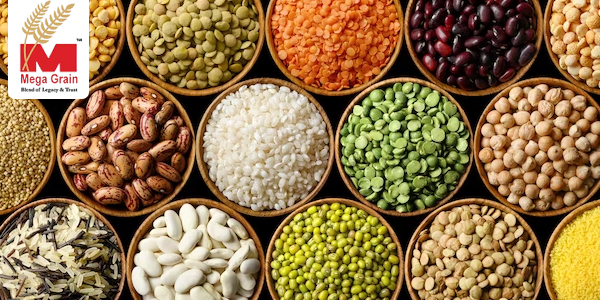
In the culinary world, pulses are common in every Indian household, forming the base of many dishes. They are used in a variety of forms – whole, split, de-husked or ground into flour. Pulses are a prime source of income for many farmers in India. They are often grown as a rotation crop, helping restore soil fertility, and supporting sustainable farming. India is the largest consumer and largest producer of pulses in the world, contributing significantly to the country’s agricultural GDP. In this blog we’ll be discussing about variety of pulses, market and transformation of pulses wholesalers in India.
The pulses of India
Pulses hold a significant historical importance in Indian culture and diet. Ancient texts mention them, signifying their importance in the diet of our ancestors. Pulses are often associated with sustenance and prosperity in Indian culture. Certain pulses like lentils are considered auspicious and are used in religious rituals and ceremonies. They are also a symbol of hospitality and are often served to guests as a sign of warmth and welcome.
From farm to plate: The journey of cultivating pulses
There are a variety of pulses that form the soul of Indian cuisine. These include:
- Lentils (masoor dal): Grown in rotation with other crops to improve soil fertility. In India, they are used to make a thick, spicy stew called ‘masoor dal’. Also, they are used in a thinner, soup-like dish called ‘sambar’.
- Chickpeas (chana): They are of two types in India – desi and kabuli. Chickpeas are a winter crop in India. Desi chickpeas are smaller, darker, and have a rough coat, and they are used in a variety of dishes like ‘chole bhature’ in north India and ‘chana masala’ in south India. Kabuli chickpeas are larger, lighter in colour, and have a smoother coat. They are used in dishes like ‘chana pulao’ and ‘chana dal’.
- Beans (rajma): They are a type of kidney bean. They are often grown in rotation with cereals and oilseeds. Often used in a popular dish called ‘rajma chawal’, which is a hearty meal of beans cooked in a thick gravy served with rice.
- Pigeon peas (toor dal): They are a long-duration crop, also a drought-resistant pulse that can be grown in less fertile soils. They are often intercropped with cereals and oilseeds. They are used to make ‘dal tadka’ in north India and ‘sambar’ in south India.
- Black gram (urad dal): It is often grown in rotation with rice to improve soil fertility. It is used to make ‘dal makhani’, a rich and creamy lentil dish. It is used to make ‘idli’ and ‘dosa’, which are popular breakfast items.
- Green gram (moong dal): It is used in both sweet and savoury dishes in India. It is grown in rotation with cereals and oilseeds. In north India, it is used to make ‘moong dal halwa’, a sweet dessert, while in south India, it is used to make ‘pesarattu’, a type of dosa.
The golden age for pulses wholesalers in India
- Growing demand for healthy food: A rich source of protein and fibre, is on the rise. This trend is expected to continue, providing a steady market for pulses wholesalers.
- Government support: The Indian government is actively promoting pulse cultivation through various schemes and incentives.
- Opportunities for export: As India is the largest producer and consumer of pulses in the world, with correct strategies, there are large array of opportunities for pulses wholesalers to tap into the global market.
- Diversification: The variety of pulses grown in India allows wholesalers to diversify their offerings and cater to different market segments.
The final word
To conclude, we can say that the idea of investing in the pulses business is not only a business strategy but also a long-term and culinary investment. The diverse varieties and exceptional quality of traditional pulses grown in India make it a versatile ingredient that can elevate a wide range of dishes. Importing, exporting, buying and selling of these authentic pulses is easy but businesses always need a common platform that can reach out to them with the exact quality product in which they dealt in. Mega Grain provides you a quality platform through which one can deal with suitable business and exchange the products according to their preferences. With this, Mega Grain aims to transform the pulses wholesalers industry with innovative and eco-friendly sourcing methods. Our commitment to quality is disrupting industry norms and connecting Indian farmers with global consumers.